
Tennis Elbow Treatment in Etobicoke: What Actually Works (Beyond Rest)
Introduction
Tennis elbow—clinically known as lateral epicondylitis—affects roughly 1% to 3% of the population. While it can eventually heal, it is notorious for recurring over and over again, which often means the true root cause of the injury is not being addressed.
At 416 Physio in South Etobicoke, tennis elbow is one of the most common injuries we see among office workers, tradespeople, gym-goers, and racket sport athletes.
What Does Tennis Elbow Feel Like?
Tennis elbow typically causes pain on the outside of the elbow that can gradually worsen over time. While some people notice symptoms after playing tennis or pickleball, many patients develop it from work-related activities, repetitive lifting, gym training, or prolonged computer use.
Common symptoms include:
Pain on the outside of the elbow
Pain when gripping objects
Discomfort when opening jars or turning door handles
Pain when lifting a coffee mug or grocery bag
Reduced grip strength
Pain that worsens after repetitive activity
In the early stages, symptoms may only occur during activity. As the condition progresses, patients often begin noticing pain during simple daily tasks that previously caused no issues.
If these symptoms sound familiar, it is important to address the problem early before the tendon becomes increasingly irritated and difficult to load.
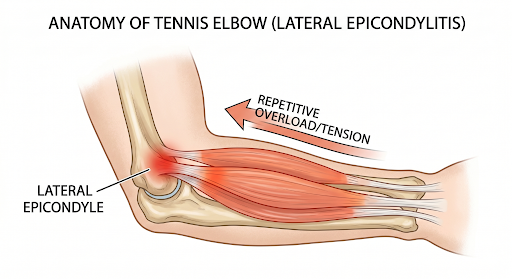
Tennis elbow occurs when the tendon attaching to the outside of the elbow becomes overloaded over time.
What Is the Best Treatment for Tennis Elbow?
Elbow pain can be quite bothersome and the first instinct might be to stop moving your arm or receive some sort of hands on care such as massage therapy, chiropractic, physiotherapy, etc. But resting and passive treatments, although great in the short term, may not be enough for the long term.
Current best evidence guidelines show physiotherapy, massage therapy, and/or Chiropractic treatments that combining hands-on manual therapy WITH specific strength training yield the greatest beneficial effects and the best value for patients.
What Is Tennis Elbow and Why Does It Happen?
Despite the name, tennis elbow is not just a “tennis” injury. It is incredibly common among people who do desk work, type frequently, lift heavy objects, or perform repetitive tasks.
So, what is actually injured? Research shows that tennis elbow is generally a breakdown of the tendon tissue (tendinosis) rather than just simple inflammation. It involves tendon overload and microtearing, leading to a significantly reduced tolerance for bearing physical loads. Because your tendon's capacity has dropped, even everyday tasks suddenly become painful.
Why Tennis Elbow Keeps Coming Back
The main reason tennis elbow is re-occurring is because patients usually do not have a thorough return to work/sport plan. A common example is someone whose elbow pain improves with massage or acupuncture, only to flare up again when they return to pickleball, golf, or the gym.
The pain returns because the tendon was never progressively reloaded. Usually when patients start to feel better they rush back to their daily activities or sport but the tendons have not fully healed yet. This happens mostly when patients are in pain, receive hands on soft-tissue therapy, feel better, and then go right back to their daily physical demands without rehabbing the injury adequately.
What Actually Works for Tennis Elbow Treatment
To truly resolve tennis elbow, you need a comprehensive approach:
Reduce Pain and Irritation:
We start by modifying your activity load and utilizing manual therapy, which has been shown in clinical trials to provide a worthwhile benefit in reducing elbow pain and disability. For some patients, clinical acupuncture can be a useful adjunct to help manage pain and support rehabilitation.
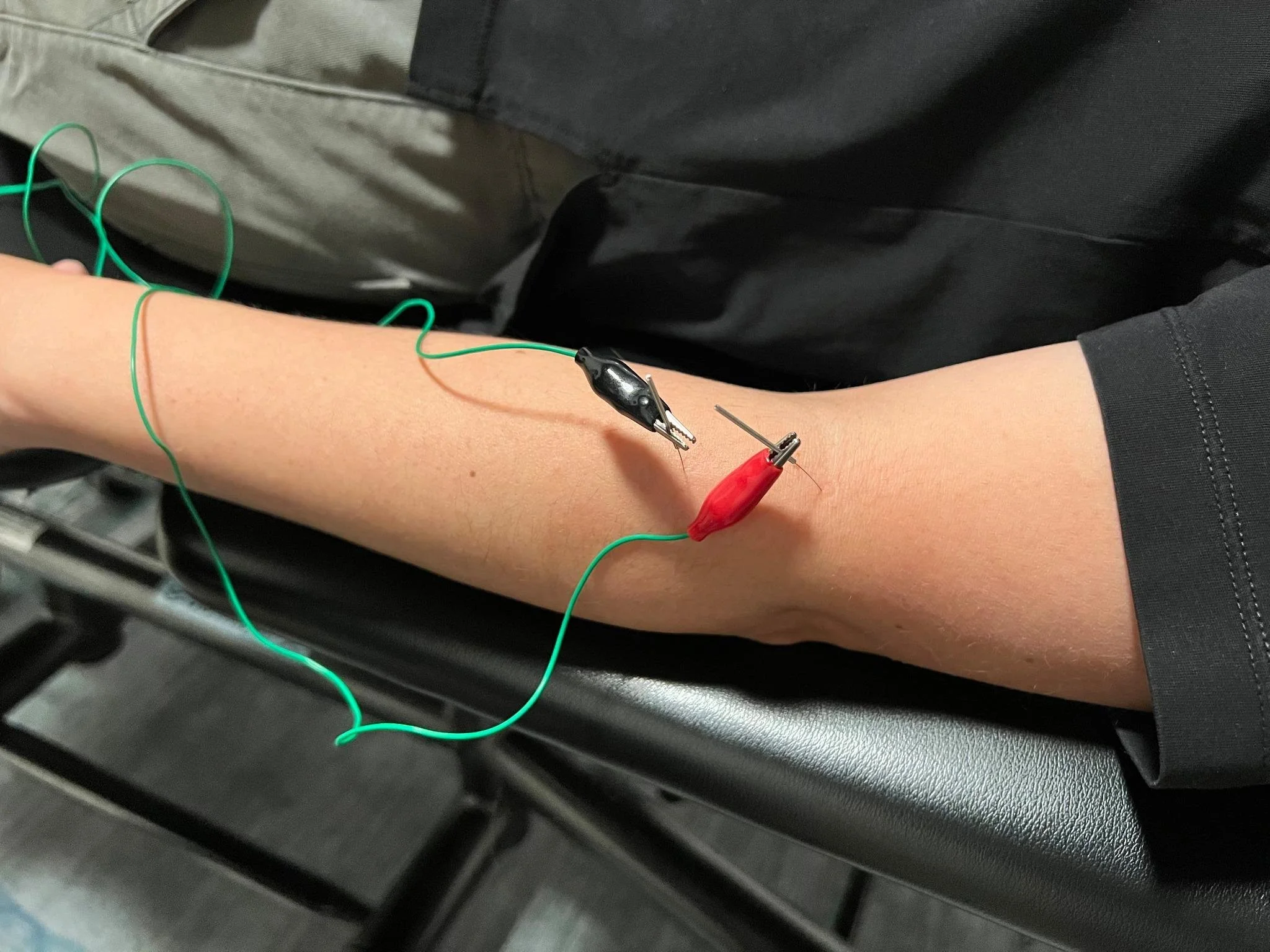
Acupuncture may help reduce pain and sensitivity, allowing patients to participate more comfortably in rehabilitation
Progressive Strengthening:
The most crucial step is gradual loading. Specific movements, called eccentric exercises, are proven to be one of the most effective ways to help your tendon adapt and heal.
Restore Movement and Joint Function:
We also assess and address movement restrictions throughout the upper extremity. The elbow does not work in isolation. Restrictions in the wrist, shoulder, neck, or upper back can alter how force is transferred through the arm and contribute to persistent symptoms. Improving joint mobility and movement quality can help create a better environment for tendon recovery.
Why We Don't Just Assess Your Elbow
One of the biggest misconceptions about tennis elbow is that the problem exists only at the elbow. While the tendon is the painful area, there are often other contributing factors that increase stress on the elbow and make recovery more difficult.
For this reason, our assessment does not stop at the elbow.
We also evaluate:
Wrist mobility and strength
Grip mechanics
Shoulder strength and control
Rotator cuff function
Neck and upper back mobility
Workstation setup and ergonomics
Sport-specific movement patterns
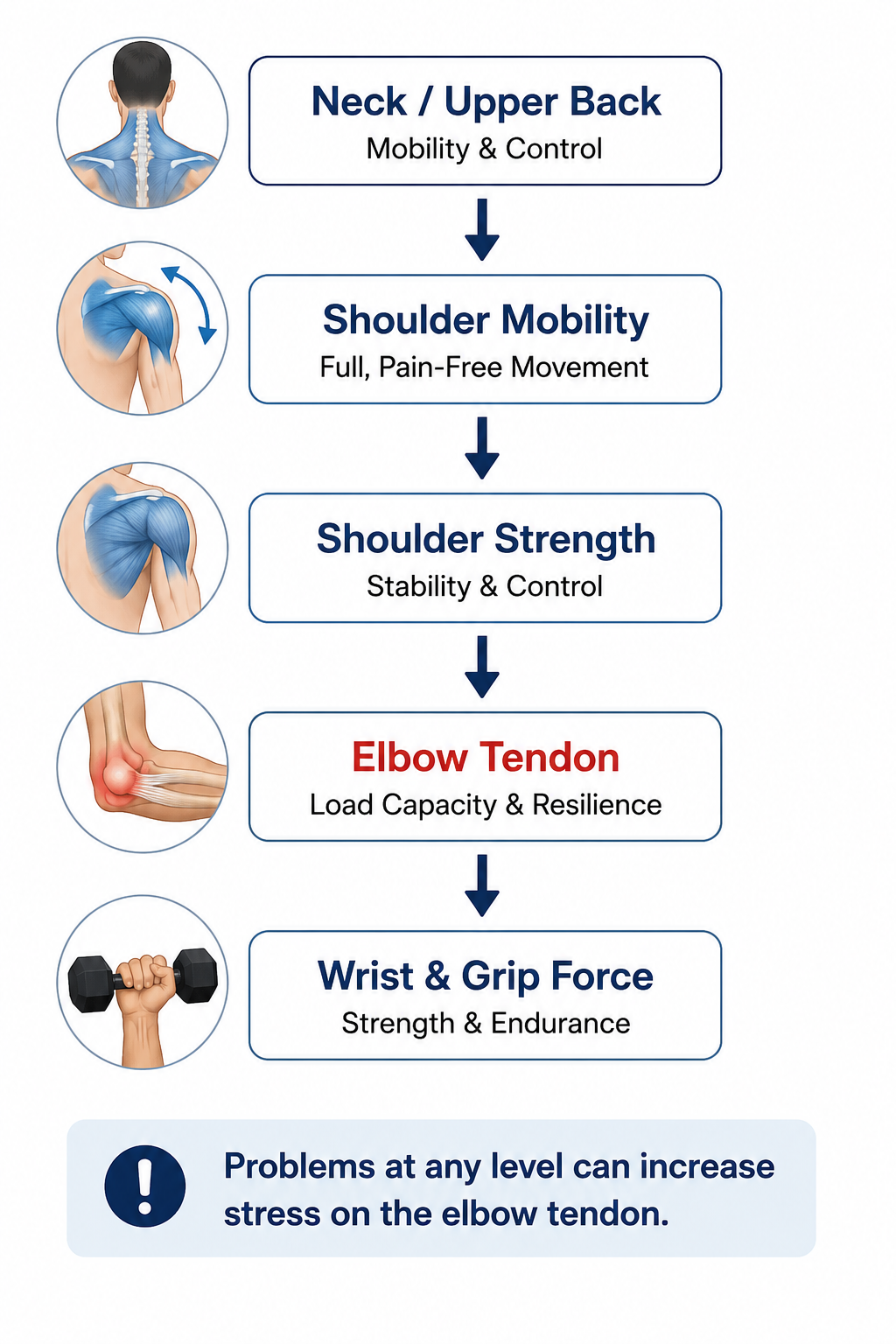
Problems involving the neck, shoulder, wrist, or grip mechanics can all increase stress on the elbow tendon and contribute to persistent tennis elbow symptoms.
For example, an athlete with poor shoulder strength may overload the elbow during tennis, golf, or weight training. Similarly, a desk worker with prolonged postures and limited neck or upper back mobility may place additional strain on the arm throughout the day.
By identifying these contributing factors, we can address the root cause of the problem rather than simply treating the painful area.
How Chiropractic Rehab Helps Tennis Elbow
As an evidence-based chiropractor, we combine hands-on manual therapy with prescribed exercises. We may introduce other modalities such as acupuncture and Mulligan belt mobilizations to further assist patients to help return to their daily activities. Additionally, we can also assess what your work/sport risks are by thoroughly investigating desk ergonomics (chair, mouse, keyboard, etc) and your specific sport techniques (golf, tennis, hockey, etc.) and try to alter your mechanics to further alleviate your pain!
Return to Work or Sport
One of the biggest mistakes patients make is returning to their normal activities too early, which can easily worsen symptoms. Instead, rehabilitation should follow a gradual progression.
As symptoms improve, treatment shifts from simply reducing pain to rebuilding tendon capacity and restoring efficient movement patterns. This often involves addressing other areas that influence how force is transferred through the arm, including the neck, upper back, shoulder, and wrist.
By gradually increasing load and reintroducing sport- or work-specific movements, we can help prepare the body for the demands of daily activities, racket sports, gym training, and physical work while reducing the risk of recurrence.
Why We Don't Just Train the Elbow
Tennis elbow is often influenced by more than the tendon itself. Limited shoulder strength, reduced upper back mobility, poor movement mechanics, or excessive gripping can increase stress on the elbow over time.
That's why later-stage rehabilitation often includes exercises that retrain the entire kinetic chain rather than focusing solely on the elbow.
Tennis Elbow Treatment at 416 Physio
At 416 Physio, our approach is designed to guide you step-by-step through a complete recovery. We start with a thorough assessment, move through targeted pain reduction and movement restoration, and focus heavily on strength rebuilding. Whether you are a desk worker, a tradesperson, a gym-goer, or an athlete, we are here to help you address the root cause and get back to doing what you love.
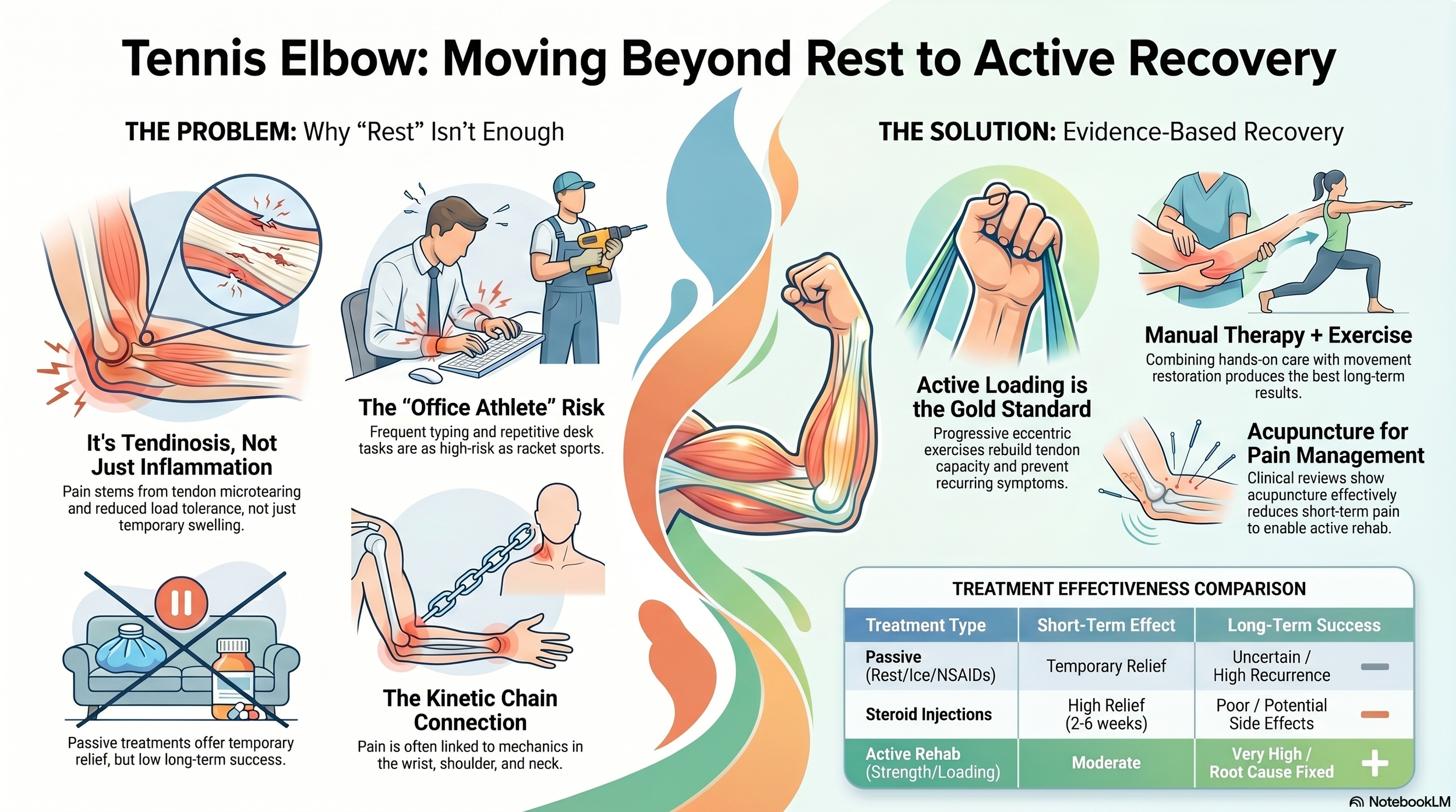
Tennis elbow is often caused by reduced tendon capacity rather than simple inflammation. Research supports a rehabilitation-focused approach that combines progressive loading, manual therapy, and movement restoration to improve long-term outcomes.
Why Our Approach Is Different
At 416 Physio, our goal is not simply to reduce pain—it is to help you return to your normal activities with confidence.
Many treatments focus primarily on symptom relief. While reducing pain is important, long-term success requires restoring your tendon's ability to tolerate the physical demands that caused the injury in the first place.
Our approach combines:
A thorough assessment to identify contributing factors
Hands-on manual therapy to reduce pain and improve movement
Progressive strengthening exercises to rebuild tendon capacity
Workstation and ergonomic recommendations when appropriate
Sport-specific modifications for athletes and active individuals
A structured return-to-work or return-to-sport plan
As a rehab-focused clinic, we believe that treatment should not end when pain improves. Instead, treatment should progress until you have regained the strength, function, and confidence needed to return to your usual activities while minimizing the risk of recurrence.
This combination of hands-on care and active rehabilitation is what allows many patients to achieve better long-term outcomes and avoid the cycle of recurring elbow pain.
Ready to Finally Resolve Your Tennis Elbow?
If your elbow pain keeps returning despite rest, massage, braces, or temporary treatment, it may be time for a more comprehensive approach.
At 416 Physio in South Etobicoke, we combine hands-on chiropractic care, progressive rehabilitation, and return-to-sport planning to help patients overcome tennis elbow and reduce the risk of recurrence.
Book an assessment today and get a clear plan to recover, rebuild strength, and return to the activities you enjoy.
FAQs
How long does tennis elbow take to heal?
Tennis elbow generally has a favorable evolution, meaning it can and does heal. However, the timeline depends heavily on your treatment approach. While hands-on treatments like manual therapy can begin to meaningfully reduce your pain and disability in as little as two to three weeks, complete recovery requires a gradual progression to rebuild the tendon's tolerance over time. Because the condition is notorious for frequent recurrences, sticking to a structured rehab plan is crucial for long-term healing.
Should I rest or exercise it?
You should definitely not rely on rest alone! While taking a temporary break from the activities that irritate your elbow can help modify your load and reduce initial pain, rest does not rebuild the strength or capacity of your injured tendon. According to systematic reviews, combining hands-on therapy with targeted, progressive strengthening (such as eccentric exercises) is the most effective approach for long-term recovery.
Can chiropractic help?
Absolutely. A chiropractic rehab approach is highly effective because it doesn't just look at the elbow—it assesses how your elbow, wrist, shoulder, and neck function together as a connected unit. Clinical reviews show that the hands-on manual therapy provided by rehab professionals offers a clinically worthwhile benefit in reducing elbow pain and disability. By combining this hands-on care with prescribed exercises, chiropractic rehab addresses the root causes of your pain for longer-lasting results.
Why does it keep coming back?
Tennis elbow becomes a recurring nightmare when patients rely on incomplete solutions. Passive treatments (like ultrasound or massage) or simply resting may reduce your symptoms temporarily, but they don't fix the underlying issue. If you return to your normal routine without rebuilding your tendon's resilience through progressive strengthening—or without correcting root causes like poor grip mechanics and posture—the overload will happen again, and the pain will return.
Do I need a brace?
A brace or special athletic tape isn't a standalone cure, but it can be a great supportive tool. Clinical reviews note that utilizing orthoses (braces), bandages, or Kinesio taping can serve as excellent complementary techniques. These tools can help modify your load and facilitate your recovery, making them very helpful when combined with a core treatment plan of manual therapy and strength training.
References
1. Shiri, R., Viikari-Juntura, E., Varonen, H., & Heliövaara, M. (2006). Prevalence and determinants of lateral and medial epicondylitis: A population study. American Journal of Epidemiology, 164(11), 1065–1074. https://doi.org/10.1093/aje/kwj325
2. Vaquero-Picado, A., Barco, R., & Antuña, S. A. (2016). Lateral epicondylitis of the elbow. EFORT Open Reviews, 1(11), 391–397. https://doi.org/10.1302/2058-5241.1.000049
3. Bisset, L., Coombes, B., & Vicenzino, B. (2011). Tennis elbow. BMJ Clinical Evidence, 2011, 1117.
4. Bisset, L., Paungmali, A., Vicenzino, B., & Beller, E. (2006). A randomized clinical trial of a physiotherapy intervention versus corticosteroid injection versus wait-and-see for tennis elbow. BMJ, 333(7575), 939. https://doi.org/10.1136/bmj.38961.584653.AE
5. Lucado, A. M., Dale, R. B., Vincent, J., & Day, J. M. (2019). Effectiveness of manual therapy in the treatment of lateral epicondylalgia: A systematic review and meta-analysis. Journal of Hand Therapy, 32(3), 325–334. https://doi.org/10.1016/j.jht.2018.01.004
6. Nagrale, A. V., Herd, C. R., Ganvir, S., & Ramteke, G. (2009). Cyriax physiotherapy versus phonophoresis with supervised exercise in subjects with lateral epicondylalgia: A randomized clinical trial. Journal of Manual & Manipulative Therapy, 17(3), 171–178. https://doi.org/10.1179/jmt.2009.17.3.171
7. Yoon, S. Y., Lee, G. Y., Kim, H., Lee, S. H., & Park, J. (2021). Effectiveness of eccentric strengthening in the treatment of lateral elbow tendinopathy: A systematic review with meta-analysis. Journal of Clinical Medicine, 10(17), 3964. https://doi.org/10.3390/jcm10173964
8. Tyler, T. F., Thomas, G. C., Nicholas, S. J., & McHugh, M. P. (2010). Addition of isolated wrist extensor eccentric exercise to standard treatment for chronic lateral epicondylosis: A prospective randomized trial. Journal of Shoulder and Elbow Surgery, 19(6), 917–922. https://doi.org/10.1016/j.jse.2010.04.041
9. Vuvan, V., Vicenzino, B., Mellor, R., & Heales, L. (2020). Unsupervised isometric exercise versus wait-and-see for lateral elbow tendinopathy: A randomized controlled trial. Journal of Science and Medicine in Sport, 23(3), 287–292. https://doi.org/10.1016/j.jsams.2019.09.008
10. Stasinopoulos, D., Papadopoulos, C., & Lamnisos, D. (2017). Eccentric-concentric training combined with isometric contraction in the treatment of lateral elbow tendinopathy. Journal of Hand Therapy, 30(1), 13–19. https://doi.org/10.1016/j.jht.2016.05.003
11. Gadau, M., Yeung, W. F., Liu, H., Zaslawski, C., Tan, J. Y., Wang, F. C., & Bian, Z. X. (2014). Acupuncture and moxibustion for lateral elbow pain: A systematic review of randomized controlled trials. BMC Complementary and Alternative Medicine, 14, 136. https://doi.org/10.1186/1472-6882-14-136
12. Zhou, K., Ma, Y., & Brogan, M. S. (2020). Acupuncture for lateral epicondylitis: A systematic review and meta-analysis. Pain Medicine, 21(11), 3081–3094. https://doi.org/10.1093/pm/pnaa109
13. Varsha, K., et al. (2024). Dry needling in lateral epicondylitis: A systematic review and meta-analysis. Archives of Physical Medicine and Rehabilitation. Advance online publication. https://doi.org/10.1016/j.apmr.2024.02.018
14. Coombes, B. K., Bisset, L., Brooks, P., Khan, A., & Vicenzino, B. (2013). Effect of corticosteroid injection, physiotherapy, or both on clinical outcomes in patients with unilateral lateral epicondylalgia: A randomized controlled trial. JAMA, 309(5), 461–469. https://doi.org/10.1001/jama.2013.129
15. Bisset, L., & Vicenzino, B. (2015). Physiotherapy management of lateral epicondylalgia. Journal of Physiotherapy, 61(4), 174–181. https://doi.org/10.1016/j.jphys.2015.07.015
16. Chen, Z., Baker, N. A., & Halliday, S. E. (2021). Effectiveness of eccentric exercise for lateral elbow tendinopathy: A systematic review and meta-analysis. Physical Therapy in Sport, 49, 116–125. https://doi.org/10.1016/j.ptsp.2021.03.005