
When Injury Forces You to Slow Down: The Mental Side of Sports Recovery
Editor's Note
At 416 Physio, we know that recovering from a sports injury isn't just a physical process. The emotional challenges of pain, uncertainty, and time away from the activities you love can be just as significant.
For this guest article, we invited Meg Pirie, MA, MSW, RSW, a social worker and psychotherapist with a special interest in supporting active people through injury rehabilitation, to share her perspective on the mental and emotional side of recovery. Her insights complement the rehabilitation strategies our physiotherapists provide and highlight the importance of caring for both mind and body throughout the healing process.
While my journey to social work was a winding one, one constant in my life has always been movement.
As a child, movement—especially the combination of speed and stillness found in softball—was where I felt at peace, challenged, and connected to myself and others. It was a place where I could take up space and feel strong. I could support my teammates, and I experienced uninhibited joy running bases and diving in the outfield.
I've also experienced the grief and anxiety that come with injury, and the uncertainty it can bring to our lives.
Our society does an incredible job celebrating achievements, performance, and outcomes. But we don't often leave much room to acknowledge the emotional side of injury. Instead of having space to recover and reconnect with our bodies, many of us feel pressure to get back to "normal" as quickly as possible.
In this article, I'll explore some of the parts of injury recovery that often go unnoticed—from the emotional impact of being injured to the pressure to "bounce back." My hope is that it encourages you to approach your recovery with a little more curiosity and compassion, remembering that your brain and body are working together to keep you safe.
If any of these words resonate with you, please know I’m extending compassion and care your way. Ensuring your mental health is also supported during sports injury recovery isn’t merely an option, it’s essential. Your feelings are valid and they are there for good reason.
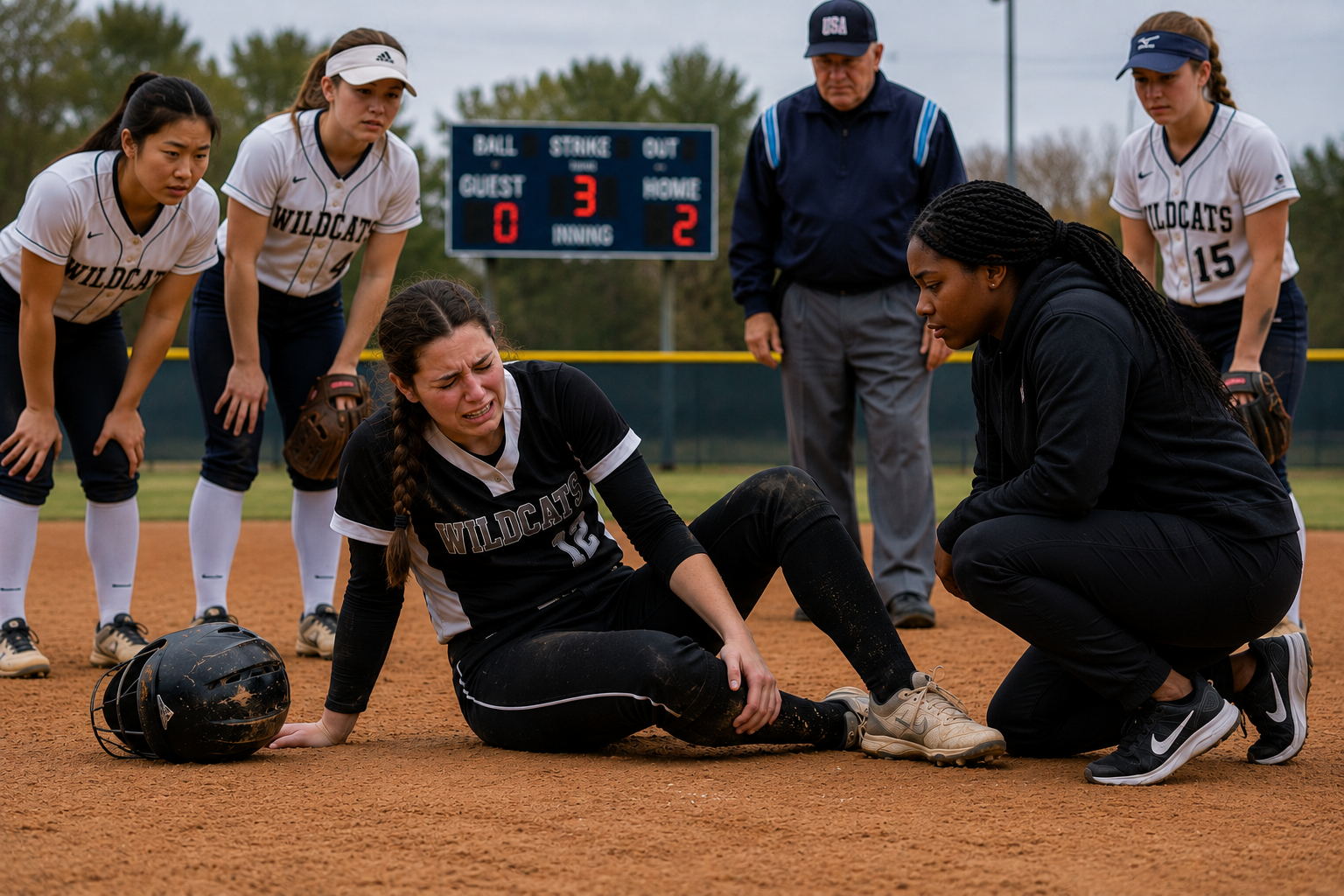
An injury affects more than your body. In a single moment, it can interrupt routines, challenge confidence, and remind us that healing often requires the support of those around us.
Why Injury Recovery Is More Than Physical
When I think about injury recovery, I often begin with the myth of brain-body dualism.
We tend to think of our physical selves and our thinking selves as separate, when in reality our brains and bodies are in constant conversation. In fact, around 80% of the signals travelling through our nervous system move from the body to the brain.
When we're injured, pain and inflammation change the signals our bodies send. Those changes influence how our brains respond, which in turn can affect the recovery process.
Our nervous system has one primary job: to determine what is safe and to help ensure our survival. When injury occurs, those signals shift, and suddenly, safety may no longer feel guaranteed.
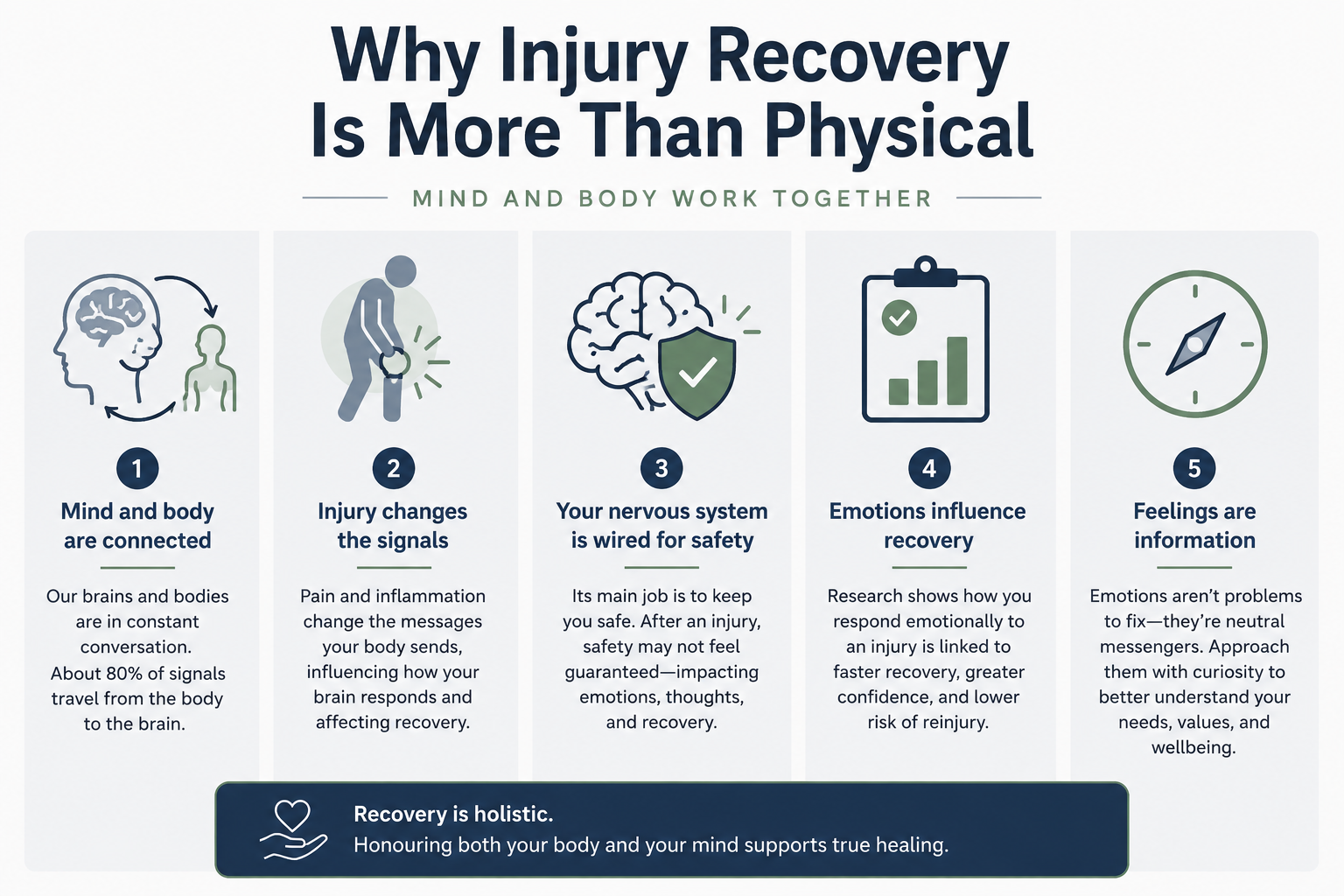
Healing after an injury involves more than muscles, tendons, and bones. Your brain, nervous system, and emotions all play an important role in the recovery process.
So, if there is a part of you that is trying to rationalize or diminish an injury with statements like “It’s just…”, it’s worth considering that a 2010 study found that how an athlete responds emotionally to an injury is connected to the speed and success of recovery and rehabilitation, as well as a sense of confidence and decreased risk of reinjury upon return.
In other words, our emotional experience isn't separate from physical recovery—it is part of it.
Our feelings aren't problems to solve or obstacles to overcome. They're neutral messengers that can tell us something about our needs, our values, and our overall well-being.
Rather than trying to fix difficult emotions, what might happen if we became curious about them? That curiosity can become another guide as we move through holistic rehabilitation.
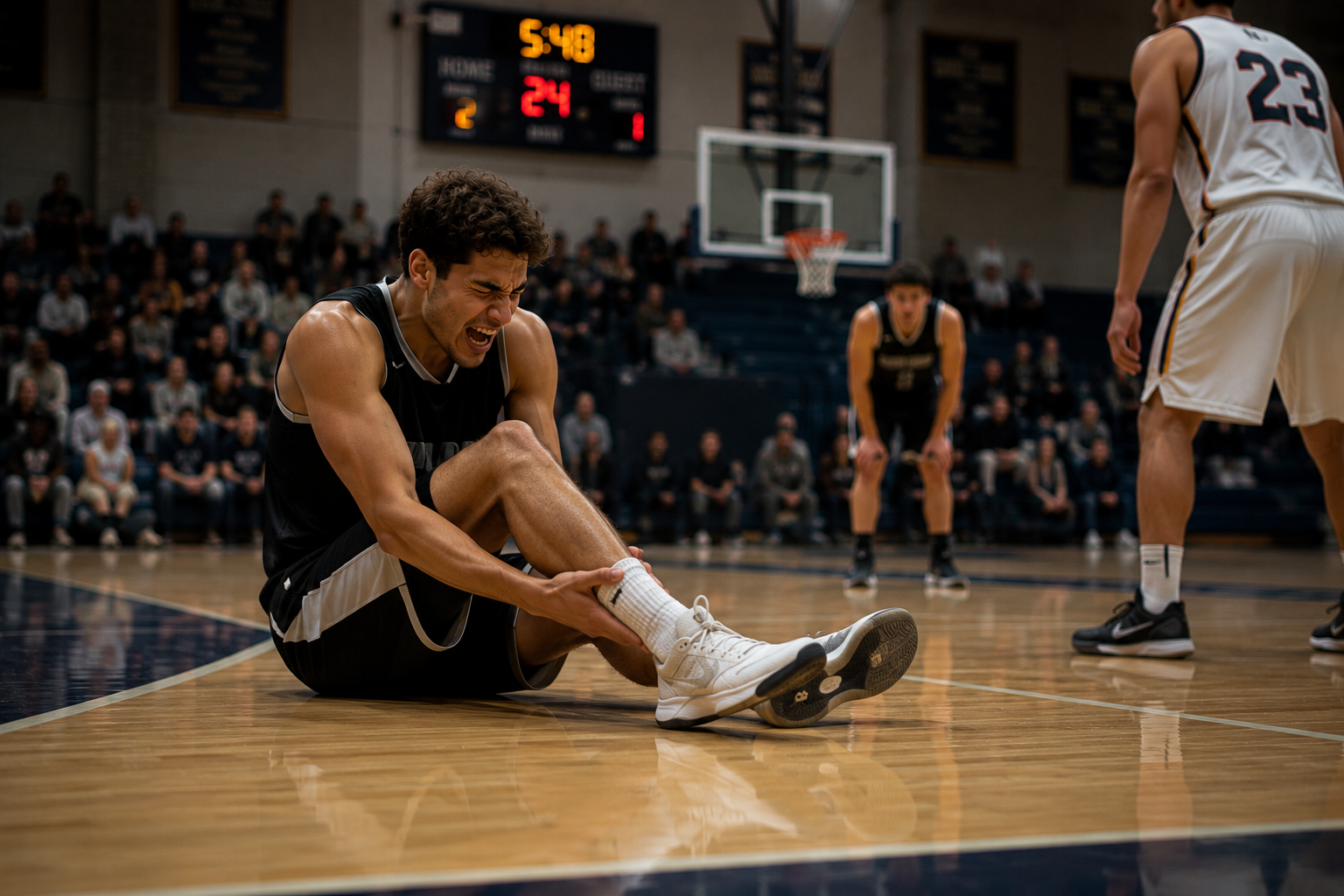
An Achilles tendon injury can be more than a physical setback. In an instant, it can interrupt routines, challenge identity, and bring uncertainty about the road ahead.
The Emotional Impact of Sports Injuries
Sports injuries are connected to a wide range of emotional responses.
A 2025 study reported that the four most common emotional experiences following a sports injury are anxiety, depression, frustration, and fear of reinjury. Findings like these highlight the importance of supporting not only the physical aspects of recovery, but the emotional ones as well.
When we're injured, it's common for our minds to drift toward worst-case scenarios. Uncertainty and doubt often take centre stage. Those feelings can be intensified by disrupted routines, reduced social connection, changes in sleep, and the sudden loss of activities that once helped regulate our mental well-being.
In other words, an injury rarely affects just one part of our lives. There’s a cascade of impacts and responses following an injury.
One emotional response that deserves far more attention is grief.
Grieving the Losses That Come With Injury
Grief is a fundamental part of being alive and being human. Yet we live in a culture that often struggles to make space for it.
If we can normalize grief as part of rehabilitation, I become curious about what happens when we have opportunities to express and process those feelings, rather than carrying them alone. This can help reduce the sense of isolation that so often accompanies injury.
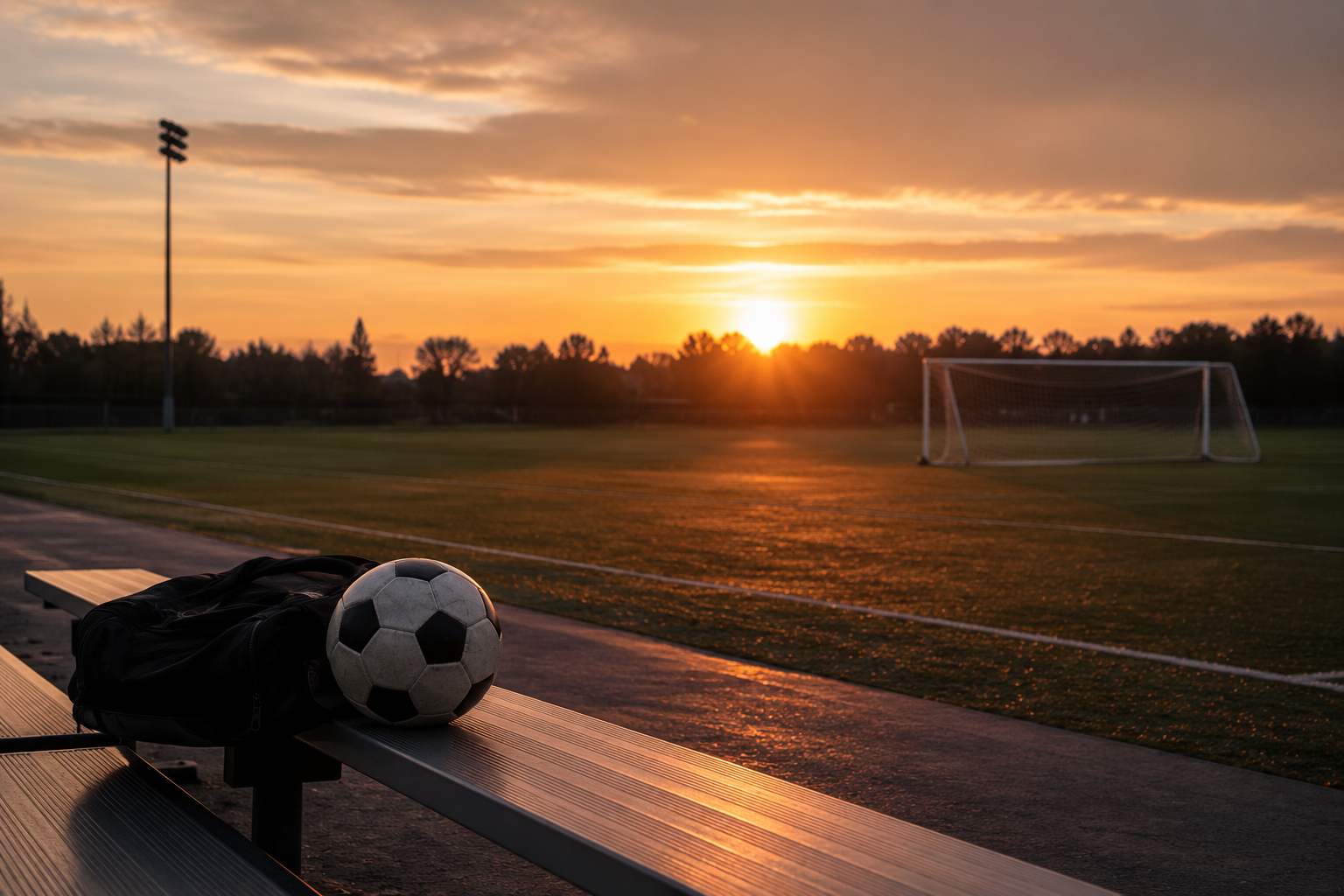
Sometimes what we grieve isn't just the injury itself—it’s the routines, relationships, goals, and sense of identity that came with the sport we love.
So, what exactly are we grieving?
The most obvious loss is the injury itself and the changes in physical function it creates. But there are often many other losses happening at the same time.
You may find yourself grieving the loss of:
your daily routine
independence
social connections and subsequent isolation
confidence
trust in your body's abilities
future plans and expectations
personal goals
parts of your identity
Another way to think about these losses is as a series of overlapping universal stressors.
In When the Body Says No, Dr. Gabor Maté suggests that our nervous systems struggle most with three experiences:
uncertainty
incomplete information
loss of control
If that sounds familiar, you're not alone. Sports injuries often involve all three.
When we view injury through this lens, grief no longer feels like an overreaction—it feels like an understandable response to profound change.
The plans you had, the version of yourself you expected to be, and the future you were working toward may suddenly feel uncertain.
This is a form of nonfinite grief. It can create fear, shift our sense of identity, and leave us wondering who we are when the activities that once grounded us are temporarily unavailable.
ndering who we are when the activities that once grounded us are temporarily unavailable.
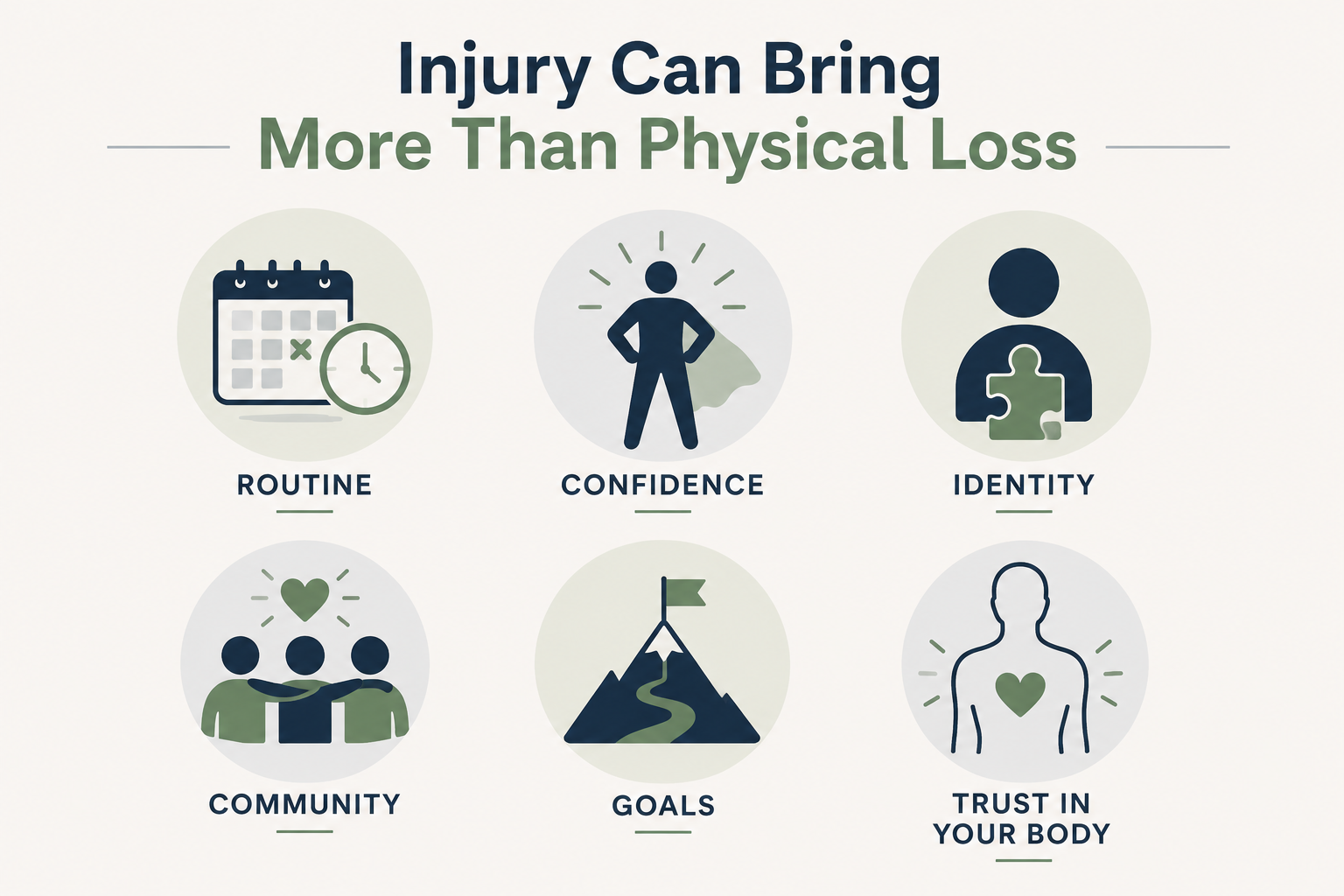
An injury can affect much more than your physical health. Many people also experience a loss of routine, confidence, identity, community, personal goals, and trust in their body during recovery.
Identity, Performance, and the Fear of Slowing Down
If you've spent years playing sports or building an active lifestyle, the idea of slowing down or pausing may not feel like an option. There’s always another distance, speed, or goal to work towards; years are invested in this quest towards optimum performance and practicing and training are core features of daily routines.
Movement becomes woven into our routines, our relationships, and the way we understand ourselves. There’s no looking back and there is certainly no rest. While I'm describing one end of the spectrum, I would argue that many of us live in an outcomes-focused culture where we are constantly encouraged to strive, improve, and achieve.
Over time, our participation in sport or physical activity can become deeply intertwined with our sense of identity. Researchers refer to this as athletic identity. While a strong athletic identity can provide motivation throughout rehabilitation, it has also been linked to increased psychological distress when injury interrupts participation.
When movement becomes part of who we are, injury can challenge much more than our physical abilities. It can leave us questioning our confidence, our sense of purpose, and even our self-worth.
So where do we go from here?
"Bouncing Back" Was Never an Option
I'm going to make a brief digression, but I promise it's connected.
Before becoming a social worker, I worked as a full-spectrum doula, supporting families during the early postpartum period. The phrase "bounce back" is often used—and, I would argue, used carelessly—to describe postpartum recovery. But there is no going back after pregnancy and birth.
In many ways, injury recovery asks the same thing of us. There is no true "going back." Instead, we move forward while getting to know our bodies in a new way. Just like postpartum recovery, having a village matters. Staying connected to loved ones, teammates, healthcare providers, and your broader community creates space for both physical and emotional healing.
The path we now confront in rehabilitation is one of newness and uncertainty–which is hard! We're getting to know our bodies as they are today—not as they were six months ago or how we hope they'll feel six months from now.
That process can be uncomfortable. It can also become an invitation. Alongside the support we receive throughout rehabilitation, one concept that has been especially helpful in my own life is Beginner's Mindset.

Approaching recovery with a beginner's mindset invites curiosity instead of judgment, helping us reconnect with our bodies one step at a time.
Practising Beginner's Mindset
A concept rooted in Zen Buddhism, Beginner's Mindset invites us to approach situations with openness and curiosity rather than judgment. When we can step into Beginner's Mindset, we create space for creativity, flexibility, and compassion.
While meditation can certainly help cultivate this mindset, an equally meaningful place to begin is by noticing all of the "shoulds" we carry.
“I should be further along. I should be stronger. I should be healing faster.”
From there, we can begin stepping into what I like to think of as the noticing brain. We notice the judgments. We notice the stories we're telling ourselves. Then, with kindness, we gently return our attention to the present moment.
Instead of asking,
"Why am I not where I used to be?"
perhaps we can ask,
"What is my body asking of me today?"
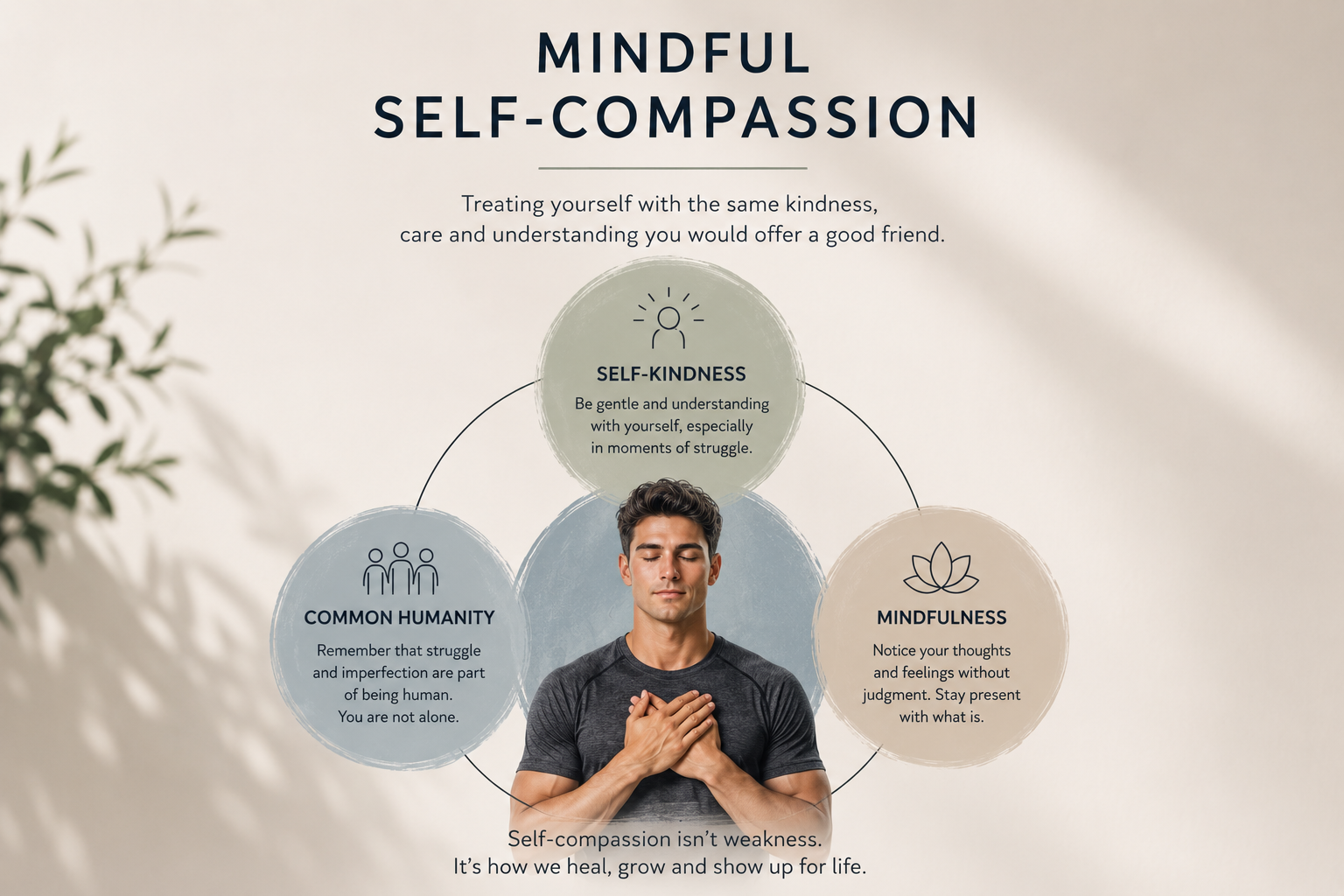
Mindful self-compassion encourages us to respond to injury with kindness, perspective, and curiosity rather than criticism.
Cultivating Self-Compassion During Injury Recovery
While in recovery, it can be challenging to figure out what the balance between gentleness and progressive load looks like. (Can you tell I've spent some time in physio for Achilles tendinopathy?)
This is where mindful self-compassion becomes such a valuable practice.
Mindful self-compassion offers a practical way to pair kindness with accountability. Rather than motivating ourselves through fear, criticism, or punishment, it encourages motivation rooted in curiosity and care.
Popularized through the work of researcher Dr. Kristin Neff, mindful self-compassion is built on three main tenants:
Self-kindness
Common humanity
Mindfulness
Instead of turning away from the emotional pain of injury, we acknowledge that pain and respond with compassion. - That is self-kindness.
We remember that we are not alone in struggling. - That is common humanity.
And rather than allowing injury to define us completely, we observe its impact without becoming consumed by it. - That is mindfulness.
In other words, injury may be part of our experience—but it is not the whole of who we are. Like many practices, self-compassion develops gradually. The goal isn't to eliminate difficult feelings. Sometimes the practice is simply asking:
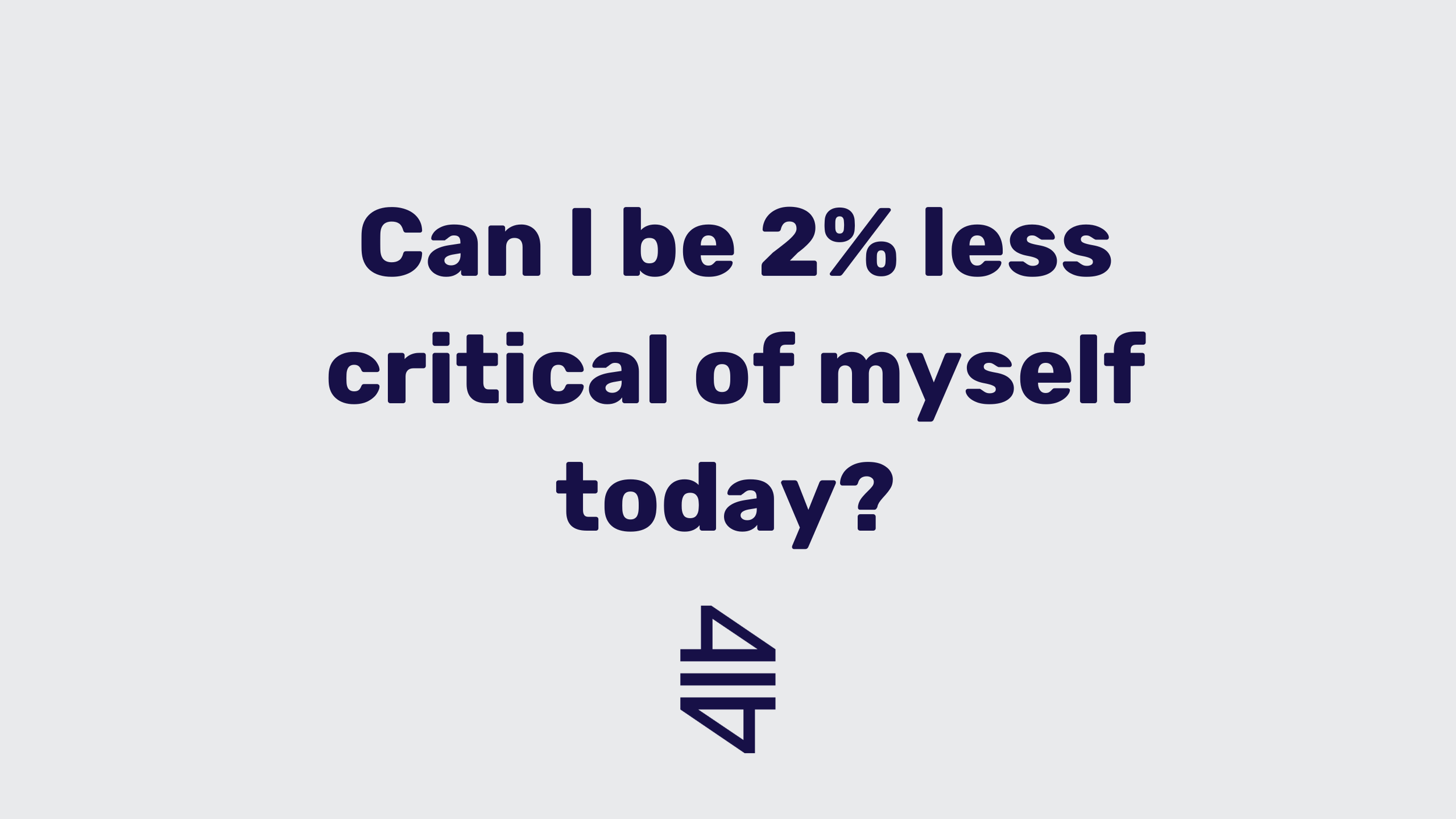
For people who are used to pushing through discomfort and performing under pressure, learning to soothe ourselves during periods of uncertainty can feel unfamiliar.
It can also be incredibly powerful. Also? Self-compassion is mult-faceted. It can be gentle, but it can also be fierce: showing up for yourself, challenging yourself, and locating the grit to continue with rehabilitation is its own act of fierce self-compassion.
Sometimes self-compassion looks like rest. Sometimes it looks like asking for help. And sometimes it looks like showing up for another rehabilitation session when motivation is low.
Regardless, whether self-compassion operates tenderly or fiercely through recovery, we acknowledge our pain because we acknowledge our humanness.
As a former supervisor and colleague once reminded me:
"We're human beings, not human doings."
You Don't Have to Recover Alone
Whether you're currently recovering from an injury or reflecting on one you've experienced in the past, I hope there's space for you to recognize the wisdom that's already within you.
Recovery isn't only about healing muscles, tendons, or bones. It's also about rebuilding trust in your body. Making peace with uncertainty. And learning to care for yourself in ways that extend beyond physical rehabilitation.
Physiotherapy can support the healing of your body by restoring strength, mobility, and confidence after injury, while counselling can support the emotional challenges that often accompany recovery. Together, they provide a more holistic path back to the activities that matter most to you.
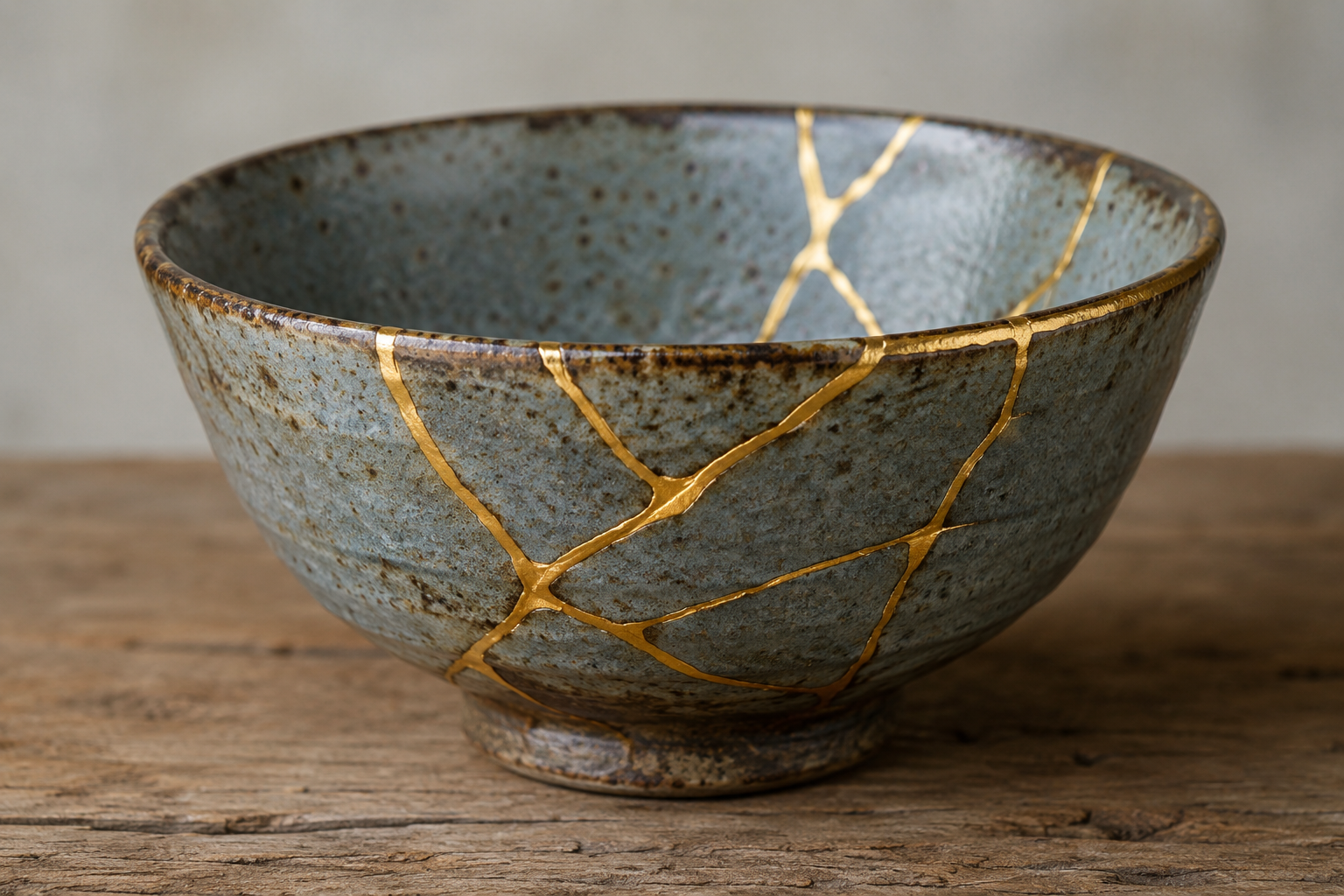
Like kintsugi, healing doesn't erase what we've been through. It reminds us that our experiences—including injury—can become part of our story without diminishing our strength or worth.
The Japanese art of kintsugi—repairing broken pottery with gold or silver lacquer so that the cracks remain visible—offers a meaningful way to think about recovery. Rather than diminishing the object's value, those visible repairs become part of its story, speaking to its resilience and character.
Like kintsugi, we may never return to exactly who we were before injury—but
we are not broken.
We are all capable of healing, resilience, and transformation.
About Meg Pirie, MA, MSW, RSW

Meg Pirie (she/her), MA, MSW, RSW, is a social worker and psychotherapist based in London, Ontario. She creates a compassionately curious space for people across the lifespan, with a practice grounded in social justice and affirming the many intersections that shape our experiences.
As a former varsity athlete with a loving and complicated relationship with competitive sports, Meg has a special interest in supporting active people and athletes through the emotional side of injury rehabilitation, identity shifts, and reconnecting with movement. Before becoming a social worker, she worked in post-secondary education and as a full-spectrum doula supporting individuals and families through infant and child loss.
Outside of work, Meg enjoys cycling, reading, and spending time outdoors with her family and rescue dog, Jolly
Meg is currently accepting new clients for virtual psychotherapy across Ontario. Learn more or book a consultation at Blueprint Counselling.
Read more 416 Physio blogs about injury recovery: