
Can a Torn Achilles Tendon Heal on Its Own?

A torn Achilles tendon can be scary—especially because it happens suddenly and without warning. Whether it happened during sports, exercise, or just a sudden misstep, one question often comes up in Google searches:
Can a torn Achilles tendon heal on its own?
The answer isn’t always simple. In most cases, healing without surgery is possible. In others, medical treatment is necessary for proper recovery. Let’s walk through what you need to know in clear, everyday language.
What Is the Achilles Tendon and Why Is It Important?
The Achilles tendon is the thick band of tissue that connects your calf muscles to your heel bone. It’s located at the back of your ankle and plays a major role in walking, running, jumping, and standing on your toes.
Because it handles so much force, the Achilles tendon is especially prone to injury—particularly during sudden movements or physical activity. Over time, small structural changes that can happen with activity and age can also weaken the tendon, increasing the risk of a tear or rupture.
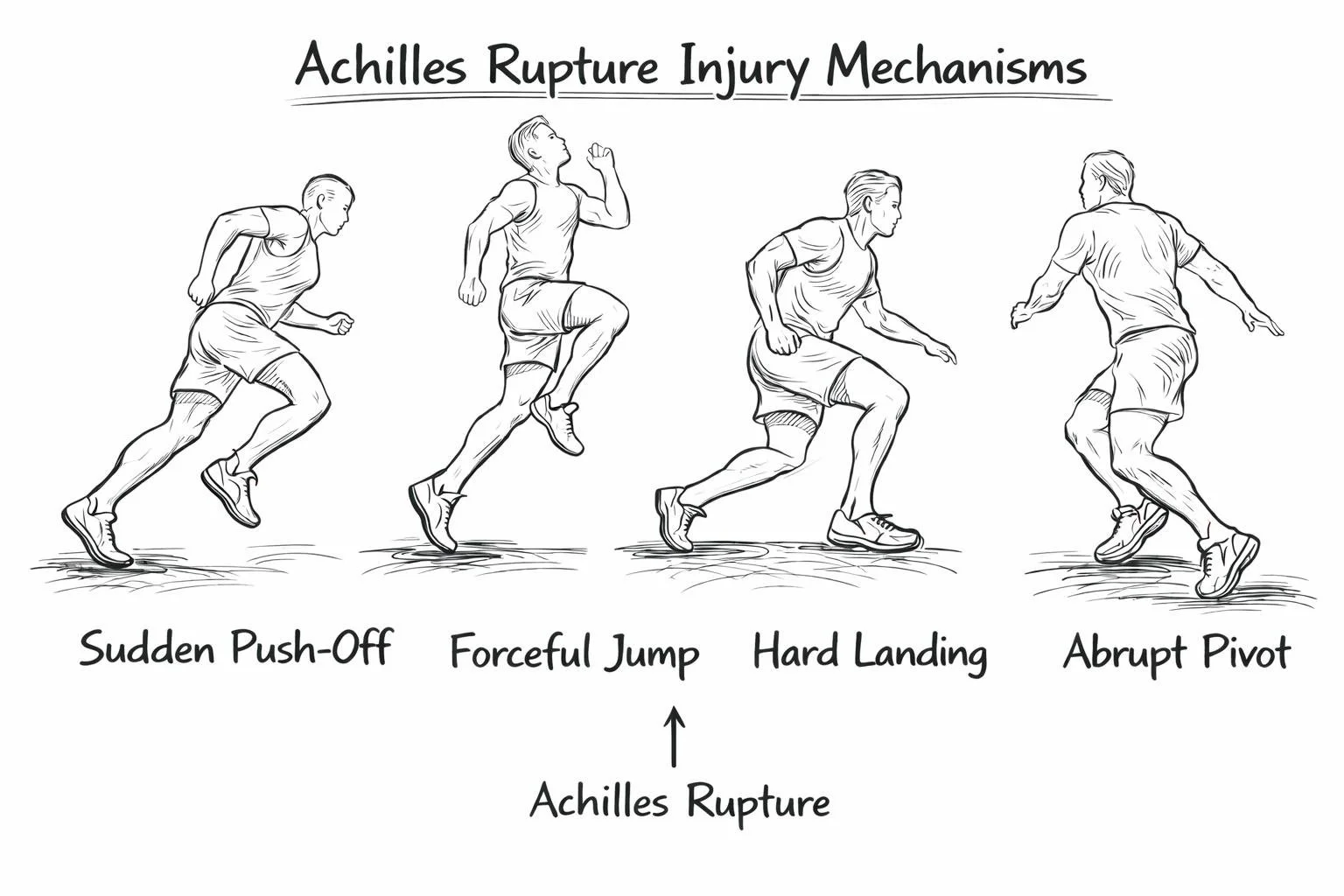
What Happens When the Achilles Tendon Ruptures?
A torn Achilles tendon can range from mild to severe. There are two main types of injuries:
Partial Achilles tendon tear: The tendon is damaged but still intact. Although high grade partial ruptures (e.g.: <85%) are also commonly treated as a complete rupture
Complete Achilles tendon rupture: The tendon snaps completely
Many people describe the injury as feeling like a kick or hit to the back of the leg.
Common Symptoms of a Torn Achilles Tendon
Common signs of an Achilles tendon tear include:
Sudden pain in the back of the ankle or heel
A popping or snapping sensation during injury
Swelling or stiffness around the ankle
Difficulty walking or pushing off the foot
Trouble standing on tiptoes or doing heel raises
If you suspect an Achilles tendon injury, it’s important not to ignore it—even if the pain starts to ease.
How Is an Achilles Tendon Rupture Diagnosed?
An Achilles tendon rupture is often diagnosed through a physical examination performed by a doctor or physiotherapist. One common test is the Thompson test, where squeezing the calf normally causes the foot to point downward. If the tendon is ruptured, this movement may not occur. Imaging such as ultrasound or MRI may also be used to confirm the severity of the tear.
Can a Torn Achilles Tendon Heal on Its Own?
This is the big question—and the most searched one.
Yes, a torn Achilles tendon can sometimes heal on its own—but it depends on the severity of the tear.
Partial tears may heal without surgery when treated early and properly
Complete ruptures usually do not heal well on their own without proper intervention (physiotherapy and sometimes surgery)
When the tendon fully ruptures, the torn ends often pull apart. Without treatment, the tendon may heal in a stretched or weakened position, leading to long-term problems with strength and mobility.
Walking on a fully ruptured tendon is possible, but it often causes the tendon end to retract higher up in the calf muscle, requiring more invasive (larger incision) surgical management.
When Non-Surgical Treatment May Work
For most people, non-surgical Achilles tendon treatment is effective— it saves you time waiting for surgery, and you can begin rehabilitation on day 1 of the injury. Depending on what country you live in, different approaches are often offered by orthopaedic surgeons.
For example, in the UK and in Canada, most patients are treated non-operatively, and surgery is reserved for those in high-level sports and very large gaps.

Non-surgical approach includes:
Wearing a walking boot or cast
Keeping the ankle in a pointed (plantarflexed) position
Early gradual weight-bearing (early mobilization and functional rehabilitation protocols have been very effective in showing similar outcomes to surgical protocols)
Continued physiotherapy to restore strength, mobility and function
Non-surgical recovery can work well, but it requires patience and careful monitoring to make sure the tendon heals correctly.
When Surgery Is Often Recommended
Surgery is commonly recommended for younger people who are very active or want to return to high-level sports requiring frequent pivoting, jumping and quick direction changes.
Surgical repair reconnects the torn tendon, helping it heal at the correct length and strength. While surgery isn’t right for everyone, it can lower the risk of re-rupture and long-term weakness in some cases.
It is important to know that long-term there seem to be very little differences between the non-surgical and surgical approaches.
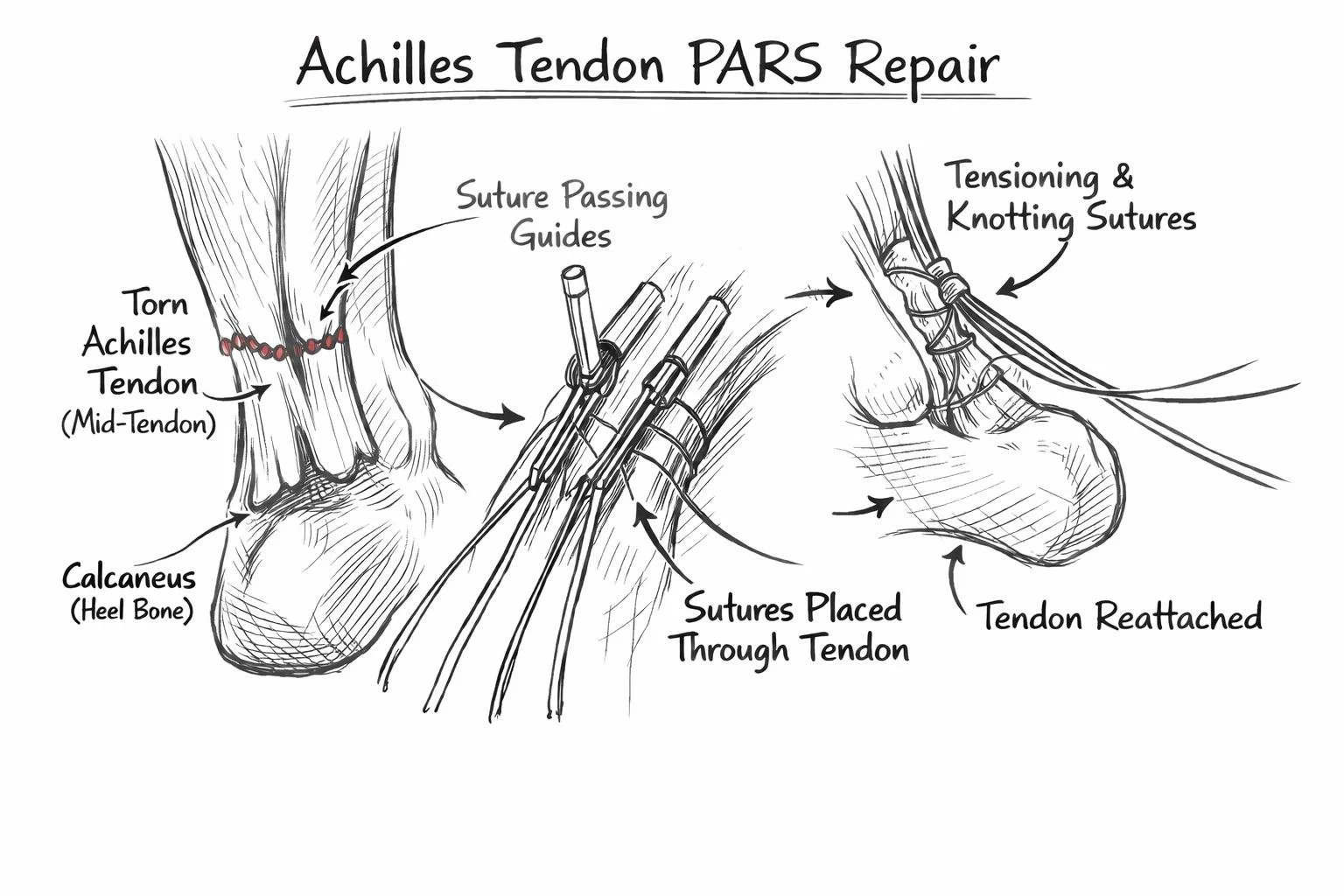
Your doctor will consider factors like:
Age
Activity level
Overall health
Size and location of the tear
In the U.S., surgery has often been the more common management, contrary to the shift toward non‑operative care seen elsewhere.
Risks of Letting a Torn Achilles Heal on Its Own
Trying to “wait it out” without proper treatment can lead to complications, including:
A weakened or overstretched (lengthened) tendon
Chronic pain or stiffness
Reduced ankle strength
Difficulty walking or exercising
Higher risk of another Achilles tendon rupture, even on the other leg
Even if pain improves, improper healing can affect how you move long term. Early evaluation by a physiotherapist who is experienced treating Achilles ruptures helps prevent these complications and supports a faster recovery.
Achilles Tendon Recovery Timeline
Achilles tendon recovery takes time, no matter the treatment approach. So many people have reached out to us with this question that we wrote an entire blog on this topic.
How Long Does a Torn Achilles Tendon Take to Heal?
Recovery time for a torn Achilles tendon depends on the severity of the injury and the treatment approach. Partial tears may recover in 10–16 weeks with proper rehabilitation, while full Achilles tendon ruptures often take 6–12 months for full recovery.
Early physiotherapy plays an important role in restoring strength, mobility, and confidence in the ankle during the healing process.
Physiotherapy is essential for rebuilding strength and preventing future injuries. Recovery speed also depends on age, health, and how closely you follow your rehab plan.
Can You Walk With a Torn Achilles Tendon?
Yes, some people can still walk with a torn Achilles tendon, especially if the rupture is partial. However, walking may feel weak or unstable because the tendon is responsible for pushing the foot off the ground. Many patients notice they cannot perform a single-leg heel raise or push off properly when walking. Even if walking is possible, it is important to seek medical evaluation quickly because untreated Achilles ruptures can heal in a weakened position.
When to See a Doctor for an Achilles Tendon Injury
You should see a doctor if you experience:
Sudden pain in the back of the ankle
A popping or snapping sensation
Difficulty walking or pushing off your foot
Early diagnosis leads to better outcomes. Imaging tests like ultrasound or MRI can confirm whether you have a partial tear or a full Achilles tendon rupture.
Time is of the essence: if you have to wait days or weeks to see your GP, go to your local ER to see a specialist quickly. Early diagnosis and proper management is crucial as surgical intervention is best done within the first 2-3 weeks of the injury.
Final Thoughts: Can a Torn Achilles Tendon Heal on Its Own?
So, can a torn Achilles tendon heal on its own?
Yes, as long as professional treatment is involved to ensure proper healing and long-term function.
If you think you’ve injured your Achilles tendon, getting medical advice early can make a big difference in how well—and how fully—you recover. At 416 Physio, we have assessed and treated hundreds of Achilles tendon ruptures, and early diagnosis and treatment consistently leads to better recovery outcomes.
Schedule an Appointment With Us
If you are in Toronto and suspect an Achilles tendon rupture, one of our physiotherapists can assess the injury quickly and guide the appropriate treatment plan.
📍 Location: Toronto
📞 Call: 416 945-0104 or book online